
Relocating From Jersey City to Montclair: What to Know
June 18, 2026
June 18, 2026
Thinking about trading your PATH routine for more space, a yard, and a different pace of life? If you live in Jersey City or Hoboken, Montclair is often one of the first suburbs that comes up, and for good reason. The move can open up more housing options and a strong downtown scene, but it also changes how you commute and how you plan your next purchase. Let’s dive in.
If you are used to the PATH, Montclair can feel like a natural next step when you want more room without giving up rail access. It sits in Essex County on NJ Transit’s Montclair-Boonton Line, with service to Newark Broad Street and Hoboken, and selected trips continuing to New York Penn.
That said, this is not a PATH suburb in the way many Hudson County buyers first imagine. Your day-to-day transit pattern changes because you are shifting from a direct rapid-transit habit to a commuter-rail routine. For many buyers, the trade is worth it, but it helps to go in with clear expectations.
Montclair offers more station flexibility than many nearby suburbs. Official township information notes six railroad stations in Montclair, and the current weekday NJ Transit schedule includes stops such as Bay Street, Walnut Street, Watchung Avenue, Upper Montclair, Mountain Avenue, and Montclair Heights.
That station variety matters if you want options based on where you live, park, or plan your morning. Instead of organizing your day around one stop, you may be able to choose a part of town that works with your home search and your commute.
For many former PATH riders, Hoboken still matters. NJ Transit’s Montclair-Boonton Line serves Hoboken, and Hoboken Terminal also connects to PATH, NJ TRANSIT rail, buses, and ferries.
In practical terms, that means Montclair can still keep you tied into the broader regional transit network. But your routine will feel different from walking to a PATH station in Jersey City or Hoboken. Train schedules, transfer timing, and station choice become a bigger part of the equation.
This is one of the biggest mindset shifts in a relocation from Hudson County. Montclair offers rail access and regional connectivity, but it does not replicate the directness of a PATH-based lifestyle.
That distinction is important because it shapes where you search and how you compare homes. If commute simplicity is your top priority, you will want to weigh the benefit of multiple stations against the reality of a commuter-rail schedule.
Montclair is much larger than Glen Ridge in both population and land area, with a July 1, 2025 population estimate of 44,633 and 6.24 square miles of land area. That larger footprint creates a broader mix of housing, streetscapes, and commercial areas.
Official township materials describe Montclair as a place with grand old homes, proximity to New York City, and a thriving arts and business scene. If you want a suburb with activity, variety, and an established downtown ecosystem, that is a big part of Montclair’s appeal.
Montclair Center’s business district includes more than 400 retailers and restaurants along Bloomfield Avenue and nearby streets. That gives you a more built-out shopping, dining, and entertainment environment than many smaller commuter towns.
For buyers coming from Jersey City or Hoboken, that can make the transition feel easier. You may be giving up the PATH, but you are not necessarily giving up access to restaurants, errands, or cultural activity in a central district.
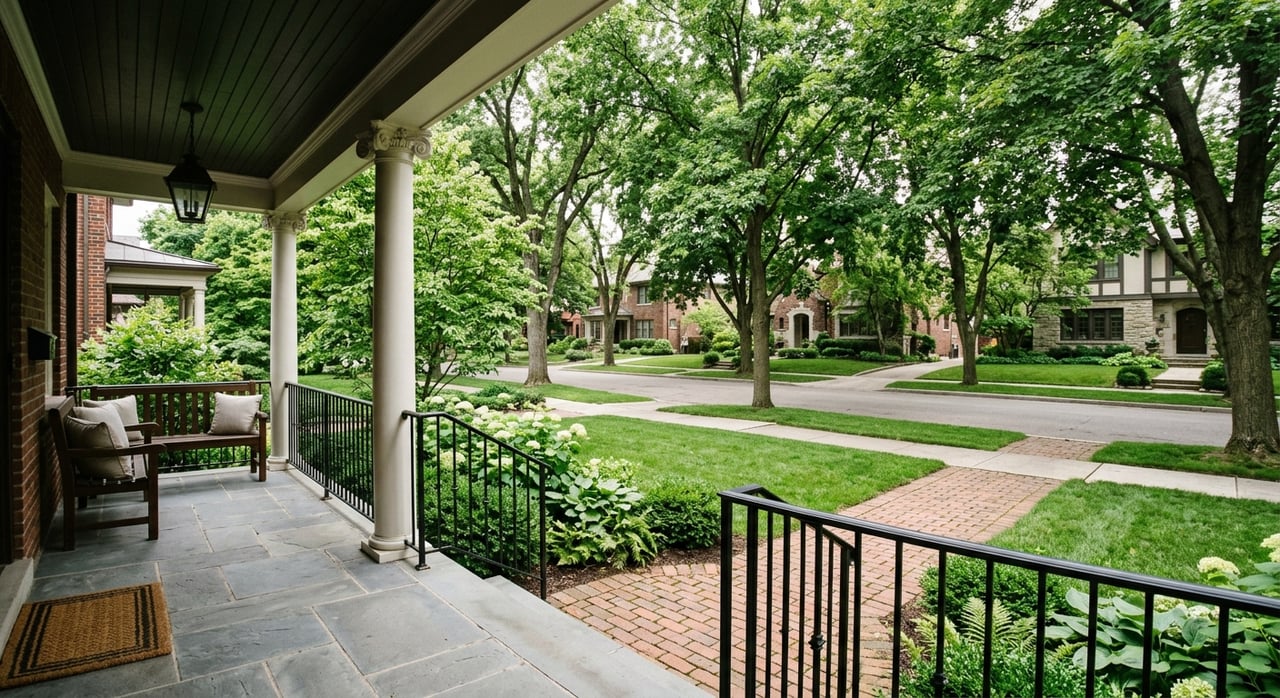
Montclair’s Upper Montclair commuter-area survey says the area was primarily built between 1900 and 1929. It also describes two- to three-story single-family houses with large front porches, medium-sized lots, front yards, and wide streets.
If your move is being driven by a desire for more outdoor space or a more traditional suburban layout, that description helps explain why Montclair stands out. Still, the feel can vary from one section of town to another, so it is smart to evaluate homes block by block rather than rely on the town name alone.
Many Hudson County buyers compare these two Essex County towns at the same time. Both are on the Montclair-Boonton Line, but they offer different relocation experiences.
Glen Ridge is much smaller, with a population of 8,259 and 1.28 square miles of land area. It has one station at Bloomfield Avenue and Ridgewood Avenue, which creates a simpler transit profile than Montclair’s multi-station setup.
Not necessarily better or easier, but often simpler. With one station and a smaller footprint, Glen Ridge can be more straightforward to understand quickly.
Montclair, by contrast, gives you more station options, a larger downtown ecosystem, and a wider range of housing environments. If you like choice and a more urban-feeling suburb, Montclair may be the better fit.
Based on official materials, Montclair has the more urban feel. Its multiple train stations, larger downtown district, and broader mix of arts, restaurants, and retail all support that impression.
For some buyers, that extra activity is a major plus. For others, a smaller and more compact town may feel easier to navigate. The right answer depends on how much convenience, quiet, and variety you want in your next chapter.
This matters more than many buyers expect. Glen Ridge’s historic district covers more than 90% of the borough, and exterior work visible from the street requires review.
Montclair also has historic character, but renovation flexibility can be very specific to the property and district. If you are dreaming about updates, additions, or exterior changes, it is important to factor those rules into your search from the start.
A move from Jersey City or Hoboken to Montclair often involves more moving parts than a standard purchase. You may be buying while selling a condo, deciding whether to keep your current property, or trying to avoid a rushed double move.
That is why sequence matters. A clear plan can help you stay flexible without losing momentum.
A mortgage preapproval is one of the first steps to line up. The CFPB says a preapproval letter is tentative, often expires in 30 to 60 days, and helps sellers see you as a serious buyer.
Timing matters here. If you get preapproved too early, you may need to refresh it while you are still preparing your current home for sale. If you wait too long, you may miss opportunities when the right house comes up.
If you already own in Jersey City or Hoboken, you will likely face a key decision early: sell the property or retain it as a rental. The CFPB notes that if you want to move, you normally try to sell your home first before buying another one.
For some households, selling creates a cleaner path into the next purchase. For others, keeping the condo may fit a long-term investment strategy. The right choice depends on your cash position, timing, and tolerance for managing two properties.
If your condo becomes a rental, tax treatment changes. The IRS says that when a home is converted to rental use during the year, you must divide expenses such as taxes and insurance between personal and rental use.
The IRS also notes that rental expenses can include items such as maintenance, insurance, taxes, and interest. If you are weighing hold-versus-sell, this is one of the details to review carefully before you commit.
Your move budget should include more than the purchase price and down payment. The CFPB says closing costs vary based on home price, down payment, lender costs, loan type, and location.
It also recommends setting aside money for moving costs and an emergency reserve. That extra cushion can make the transition much less stressful, especially if your timeline shifts or your new home needs work before move-in.
If you are selling in New Jersey, transfer taxes are part of the planning process. The state imposes the Realty Transfer Fee on the seller, and for deeds over $1 million, the Graduated Percent Fee is also the seller’s responsibility.
That cost should be part of your early math, not a last-minute surprise. It can affect your net proceeds and how much you want available for the next purchase.
A relocation like this is rarely just about finding the right house. It often means syncing preapproval timing, prepping your current home, comparing sale-versus-rental options, and lining up closing dates.
This is where a concierge-style process can make a real difference. When you have one team helping coordinate staging, vendor work, pricing, and timing, you are less likely to end up in a rushed renovation, a temporary housing scramble, or an expensive double move.
When you start looking in Montclair, focus on the factors that shape daily life the most:
Montclair can offer a strong balance of space, character, and regional access. The key is making sure the house, the commute, and the move timeline all work together.
If you are planning a move from Hudson County to Montclair, the process is easier when you have a clear strategy from day one. Mumoli Real Estate Inc. can help you coordinate the sale of your current home, evaluate your next move, and create a concierge plan that keeps the transition organized and low-stress.
Stay up to date on the latest real estate trends.




Private real estate advisory for New Jersey’s most discerning clients. Specializing in luxury homes, new developments, and condo conversions across Jersey City, Hoboken, Weehawken, and the NJ Suburbs.