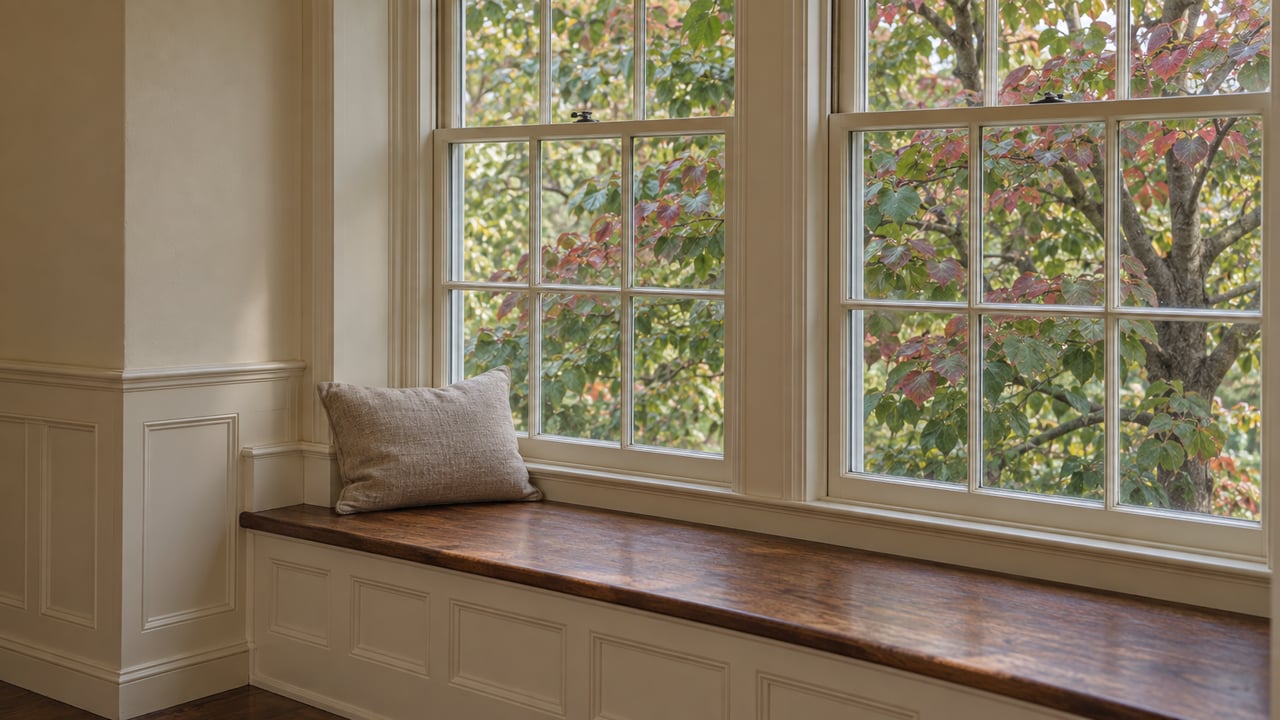
Montclair Property Tax Revaluation: What Buyers Should Know for 2028
October 1, 2026
October 1, 2026
A buyer touring a home in Montclair right now sees a tax bill printed on the listing sheet like it's a fixed cost, similar to the roof age or the square footage. It isn't. That number reflects an assessed value the township has not meaningfully updated since 2018, sitting on a home that has likely gained tens of thousands of dollars in market value since then. Montclair's own tax assessment currently runs at just 61.52 percent of true market value, one of the lowest ratios in Essex County, and a county-ordered revaluation already underway will reset that number for every property in town starting with the 2028 tax year. The bill on the listing you're comparing against Glen Ridge or Maplewood is based on an assessment from the last full revaluation and the current tax rate, not a forecast of what you'll actually owe once you own the place.
That gap matters more in Montclair than in most towns you'd cross off a shortlist, because the assessed-to-market spread here is wide enough to distort comparisons between two homes that look identical on paper.
Every New Jersey property tax bill is the product of two inputs: the assessed value the township has on file, and the tax rate applied to it. In Montclair, the 2026 combined rate is $3.766 per $100 of assessed value, up from $3.516 the year before. But the assessed value itself is the wobble in that equation. Because Montclair hasn't run a full revaluation since 2018, the township's assessed values as a whole sit at only 61.52 percent of what an appraiser would call the properties' fair market value today, according to the state's certified equalization ratio. That means two homes that would sell for the same price this fall can carry very different tax bills, depending on how far each one's file has drifted from reality since the last reval.
As Montclair Local reported, Township Manager Stephen D. Marks has been direct with residents about what the coming reval will and won't do:
"This is not a means of generating more revenue. The town's portion of the tax dollar is less than 25 cents."
The reval reassigns who pays what. It does not grow the total levy. That distinction is the whole story for a buyer trying to underwrite a Montclair purchase past 2027.
You don't need to wait for the reval to see the assessed-value problem in action. Reporting on current Montclair tax bills shows the average bill lands around $22,500 on a home assessed near $640,000, but that average hides a real range depending on which part of town you're in.
| ZIP code | Area | Reported average bill |
|---|---|---|
| 07042 | Central and South End | ~$16,700 |
| 07043 | Upper Montclair | ~$23,000 |
That roughly $6,300 gap between ZIP codes isn't a reflection of home size alone. It reflects differences in local levies and how each section of town has been valued relative to the others since 2018. A buyer comparing a listing in the South End against one in Upper Montclair on price per square foot is only getting half the picture without checking which side of that assessment gap the specific address falls on.
The Essex County Board of Taxation formally ordered Montclair's town-wide revaluation in November 2025, giving the township until October 1, 2027 to complete it, with the new values taking effect for the 2028 tax year. The Township Council responded by authorizing a $2 million emergency appropriation to fund the work, covering the inspection and data collection on the town's roughly 11,000 parcels. The township contracted Professional Property Appraisers, Inc. to run the revaluation under the Municipal Assessor's office.
From here, the sequence runs on a fairly fixed clock. Updated tax maps go to the state for approval, expected in fall 2026. Interior and exterior inspections follow through 2026 and 2027. Proposed new assessment letters are expected to reach mailboxes in the second half of 2027, with a short informal review window right after. The final tax list gets certified in early 2028, and the New Jersey Division of Taxation sets the formal appeal deadline for reval-year assessments at May 1, 2028, a month later than the standard April 1 cutoff.
Second Ward Councilor Eileen Birmingham, who chairs the council's finance committee, has framed the timeline as deliberate rather than rushed, telling residents the town wants to work through the process thoughtfully given how much is at stake for individual assessments.
Here is the part that matters most for anyone deciding between two Montclair properties, or between Montclair and a neighboring town. Because the reval redistributes the same total tax burden rather than adding to it, some properties are positioned to see their share rise and others to see it fall, and the direction is largely predictable from what's happened to each property since 2018.
Homes that have appreciated faster than the townwide average, gut renovations, additions, properties on blocks that have seen the sharpest price gains, are the ones likely to see their assessed value jump the most relative to their neighbors, which pushes their tax share up. Older inventory that hasn't been touched with permits or major capital work, and has appreciated more slowly than the Montclair average, may see its relative share ease. Montclair's own 2018 reval offers a rough guide to the scale involved: about half of properties saw their bills rise and half saw them fall, with the average swing landing around $400 a year. Given how much residential values have moved since then, and how much the school and municipal levies have already climbed heading into 2026, the shift after the 2028 implementation could run considerably larger for the properties on the losing side of that math.
For a buyer, this means the tax line on a recently renovated flip is telling you less about your 2028 bill than the permit history behind it. A home that's had a full gut renovation since 2018 is a much stronger candidate for a post-reval increase than a similarly priced home that hasn't been touched.
The reval isn't arriving in a quiet fiscal moment. In March 2026, Montclair voters faced a referendum tied to a nearly $20 million school district budget deficit. The first ballot question, a one-time charge to retire prior-year debt, passed by just 80 votes out of more than 9,400 cast, adding roughly $1,117 to the average assessed home's bill. A second question, which would have added a permanent $443 a year to fund ongoing operations, failed by 231 votes. Both margins were razor thin, and both signal a town where residents are already watching every new line on the tax bill closely.
That backdrop is worth knowing if you're weighing Montclair against a town with a calmer recent tax history. It doesn't make Montclair a riskier place to buy. It does mean the reval's tax-share shuffle, when the letters land in late 2027, will be received by a town that has spent the past year arguing hard over smaller increases than a full revaluation is likely to produce for the homes on the losing side.
Should you assume you'll inherit the seller's current tax bill? No. Your bill is calculated from the assessed value and rate in place at the time you own the home, not the number printed on today's listing sheet, and that number is set to change for every property in town by 2028.
Does a lower current bill mean a better long-term deal? Not necessarily. A low bill today on a heavily renovated home may simply mean the assessment hasn't caught up yet, which is exactly the kind of gap the reval is built to close.
What should you ask before comparing two Montclair listings? Ask for the property's permit history since 2018. A home with a documented addition or gut renovation is a stronger candidate for a tax increase after 2028 than a comparable home that hasn't filed permits in that window. Also check which ZIP code the address falls in, since the current spread between 07042 and 07043 already shows how much local levies vary block to block, independent of the coming reval.
Is there a way to plan for the post-2028 number now? Get a current comparative market analysis that accounts for the property's likely position once assessments catch up to market value, rather than treating today's bill as fixed. That's the only way to know if you're comparing Montclair to Glen Ridge or Maplewood on equal footing.
If you're weighing a Montclair purchase against another Essex County town and want a read on where a specific address is likely to land once the reval catches up, The Mumoli Collective can walk through the permit history, current assessment, and post-2028 exposure on any property you're considering before you write the offer.
This article is general information, not legal, tax or financial advice. Consult a qualified professional about your situation.
Stay up to date on the latest real estate trends.

Private real estate advisory for New Jersey’s most discerning clients. Specializing in luxury homes, new developments, and condo conversions across Jersey City, Hoboken, Weehawken, and the NJ Suburbs.