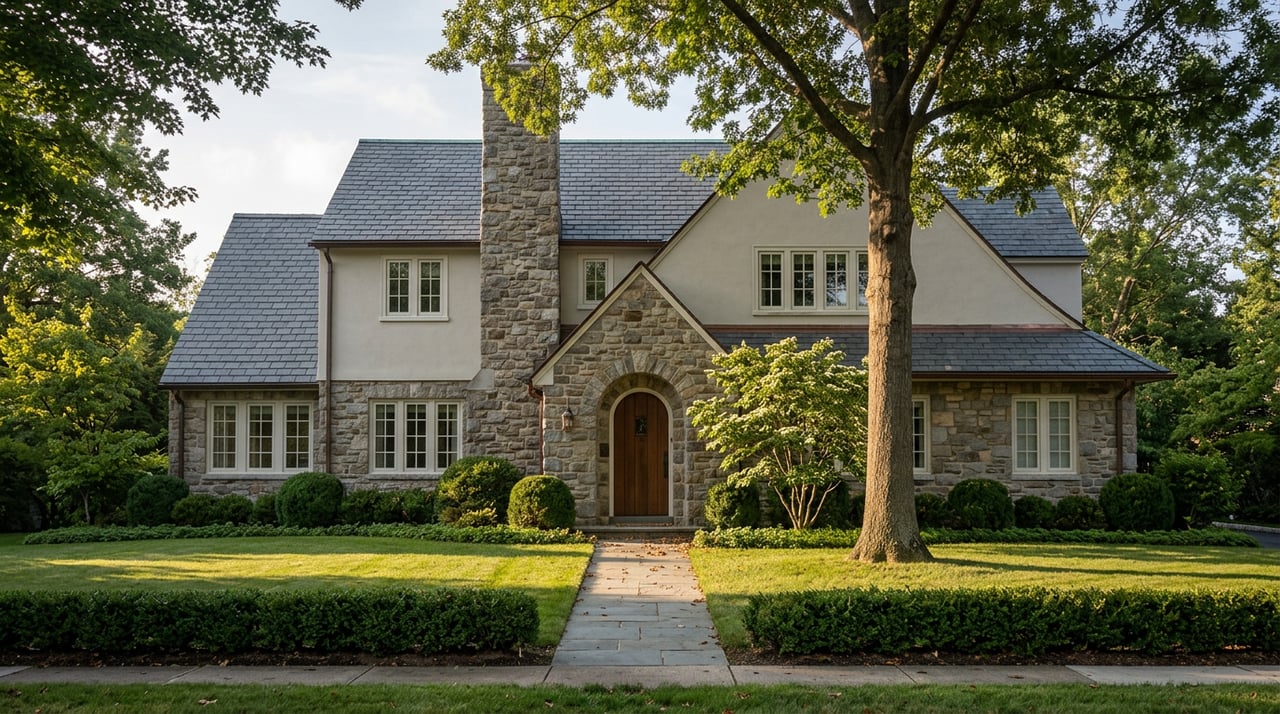
Maplewood NJ Home Prices by Neighborhood Explained
September 3, 2026
September 3, 2026
In July 2025, the Maplewood Township Committee sat down for a routine meeting and ended up debating a single home sale. A house on Hilton Avenue, carried on the tax rolls at $684,000 and listed at $879,000, had just closed at $1.1 million. Committee members called the number outrageous. A rival brokerage that had listed the home posted a public rebuttal defending the seller's right to the market price. The exchange made the local paper twice.
The argument treated the sale like an anomaly. It wasn't. It was a data point in a pattern that's been building in Maplewood's Hilton section for years, and the pattern has less to do with buyer frenzy than with a decision Maplewood's tax assessor made back in 2007.
If you're comparing Maplewood neighborhoods, or weighing Maplewood against South Orange, the Hilton Avenue controversy is worth understanding before you write an offer. It tells you something about how this market actually prices risk that the median sale price on any portal will not.
Start with the gap that triggered the outrage: a home assessed at $684,000 sold for $1.1 million, a 61 percent spread between what the town says the house is worth for tax purposes and what a buyer actually paid. That gap is not a Hilton-specific glitch. It's a symptom of how Maplewood's assessments have aged since the town's last full revaluation in 2007.
A local Keller Williams agent pulled the closing data for six of Maplewood's informal neighborhoods after the meeting, comparing average sale prices in 2019 to the same period in 2025. The results didn't track with the "estate section versus starter home" story that usually explains Maplewood's price map.
| Neighborhood | Price growth, 2019 to 2025 |
|---|---|
| Newark Heights | +79% |
| Hilton | +77% |
| Valley | +63% |
| College Hill | +59% |
| Jefferson Village | +37% |
| Wyoming | Largest dollar gain of the six and the largest percentage move |
Hilton, the neighborhood with the smallest average lot size in town, saw its average sale price move from roughly $390,000 in 2019 to roughly $690,000 in 2025. Wyoming, the estate section along the South Mountain Reservation border, moved from an average of $833,000 to $1,516,000 over the same stretch, a bigger dollar swing and a larger percentage gain than the other neighborhoods listed. Jefferson Village, the downtown-adjacent stretch, grew the slowest of any section on the list.
That is not the shape a simple gentrification story produces. Gentrification stories predict the cheapest neighborhood catching up in dollars as buyers get priced out of everywhere else. This data shows Hilton's prices rising substantially, but not at the fastest rate among the neighborhoods listed—a different pattern with a different cause.
Maplewood's last full revaluation was in 2007. According to the Essex County Board of Taxation's status report for the current tax year, Maplewood's Director's Ratio sits at roughly 101.60 percent as of April 2026. Essex County towns currently being revalued include Montclair, Newark, Bloomfield, and several others working through revals ordered for 2026 through 2028, alongside Verona, Glen Ridge, and Cedar Grove, which just completed theirs with new assessments already reflected in 2026 tax bills.
According to the New Jersey Division of Taxation, a townwide ratio above 100 percent tells you the average assessment across Maplewood tracks close to market value. It tells you nothing about whether Hilton and Wyoming are tracking evenly with each other. Local commentary following the Hilton Avenue sale traced the gap back to the years before 2007, when Hilton's smaller, older housing stock had drifted into being taxed on a higher share of its actual value than Wyoming's larger lots. The 2007 reval reset both neighborhoods to accurate 2007 values, and by that same local accounting, finally taxing Hilton fairly is credited with helping fuel the demand, and the price growth, that followed. A neighborhood that appreciates faster than Maplewood's overall average, which Hilton has done since 2019, ends up with an assessment that falls further behind its true value with every year that passes without a fresh town-wide reval.
That is the mechanism behind the table above. Hilton wasn't just cheap because the lots are smaller. Its 2007 reset made it fairly taxed for the first time in years, which helped draw the buyers who have since pushed its price up substantially, though Wyoming's percentage gain was greater. The faster Hilton's price climb continues, the further its assessment falls behind its own market value, at least until the next town-wide reval catches up.
If you're comparing Maplewood neighborhoods right now, the practical takeaway isn't which section is cheapest today. It's how long today's price relative to its assessment is likely to hold.
A few things worth checking before you write an offer in any of Maplewood's six sections:
Maplewood's broader market context makes the timing question sharper. Per June 2026 GSMLS data, the townwide median single-family sale price hit $1,225,000, up 11.4 percent year over year, with homes averaging 11 days on market and closing at 121.9 percent of list price. Active inventory sat at just 18 listings, down 45.5 percent year over year. That is a market where a well-priced Hilton listing, sitting on a 2007-era assessment, is going to draw the same bidding pressure as anything else in town, and the buyer who wins it inherits both the upside and the eventual reval risk.
Buyers cross-shopping Maplewood against South Orange, which share the South Orange-Maplewood School District, are effectively comparing two different points in the assessment cycle. South Orange completed its own town-wide revaluation in 2024, according to the same Essex County status report, putting its assessed values much closer to current market prices than Maplewood's 2007-era baseline. Maplewood has typically traded at a discount to South Orange on a straight sale-price basis, but a freshly revalued town and a nineteen-year-old one carry different tax trajectories even when list prices land close together.
That doesn't make one town the better buy. It means the two towns answer a different question.
How do I check a specific address before I bid? Ask your agent to pull the current assessed value alongside recent closed sales on that same block, not just the townwide median. Hilton, Wyoming, and Maplewood's other four sections have moved at meaningfully different rates since 2019, and the townwide number will not tell you which one you're actually buying into.
Reading a Maplewood listing well means reading two numbers at once, the price it's asking and the assessment it's still carrying. If you want a second set of eyes on both before you write an offer in Hilton, Wyoming, or anywhere in between, The Mumoli Collective can walk the comps and the tax history with you, block by block.
This article is general information, not legal, tax or financial advice. Consult a qualified professional about your situation.
Stay up to date on the latest real estate trends.
Private real estate advisory for New Jersey’s most discerning clients. Specializing in luxury homes, new developments, and condo conversions across Jersey City, Hoboken, Weehawken, and the NJ Suburbs.