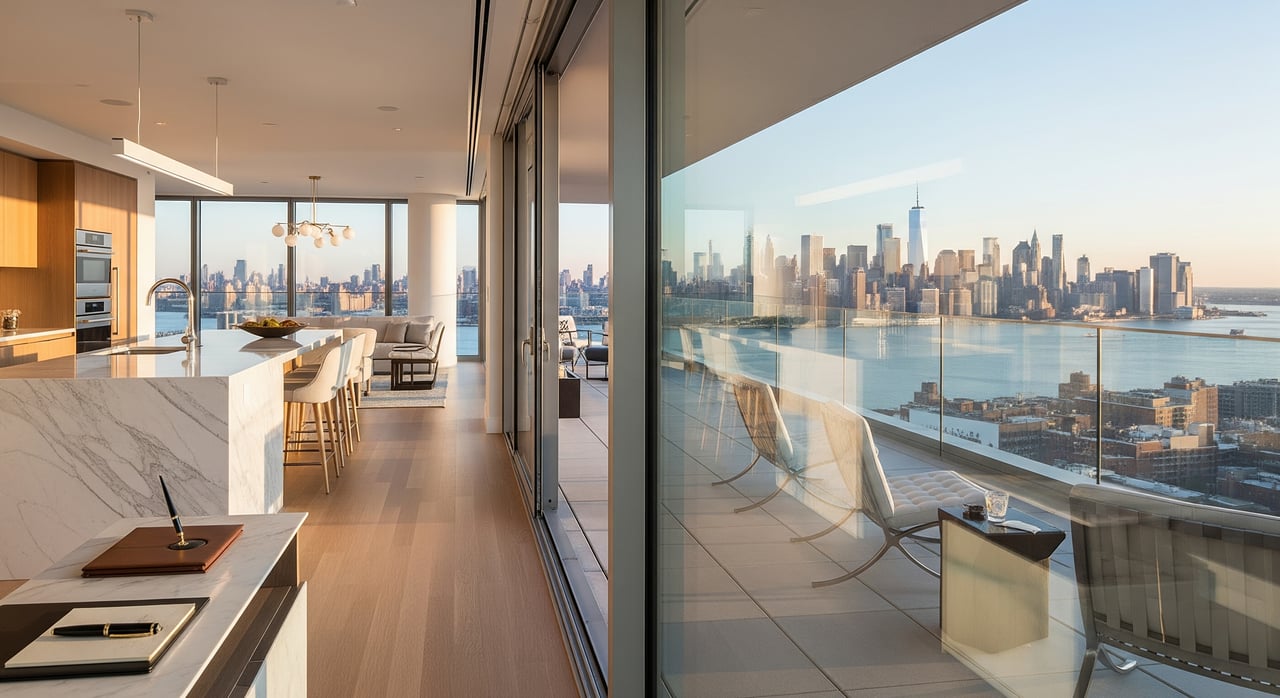
What Hoboken NJ Mansion Tax Means for Home Buyers
December 18, 2025
December 18, 2025
Shopping in Hoboken at or near the seven-figure mark? One small line item can surprise first-time luxury buyers: New Jersey’s “mansion tax.” If you plan to buy a condo or townhome around $1,000,000, understanding when this 1% charge kicks in, who pays it, and how it shows up at closing will help you budget with confidence. In this guide, you’ll learn the basics, see practical examples, and get a checklist to keep your purchase on track. Let’s dive in.
New Jersey imposes an additional transfer tax, often called the “mansion tax,” when the consideration for a residential property transfer equals or exceeds $1,000,000. The tax equals 1% of the total consideration. It is separate from the state’s standard Realty Transfer Fee, which still applies under its own schedule.
For Hoboken buyers, this comes up often because many condos and townhomes list in price bands near the $1,000,000 threshold.
The 1% surcharge applies to residential properties transferred by deed, including:
Co-ops are uncommon in Hoboken, and their treatment can differ since co-ops often involve shares rather than a deed. If you are evaluating a non-standard structure, ask your attorney and title company to confirm treatment.
If several parcels or units are bundled under one deed, the combined price can trigger the 1% even if each unit alone is below the threshold. Structure matters, so confirm with your closing team early.
The mansion tax equals 1% of the total consideration for the transfer. Simple examples:
Consideration generally includes:
Seller credits typically do not reduce the reported sale price if the contract states a gross price. The way your title company and attorney record the transaction controls the tax calculation, so get confirmation in writing.
The mansion tax is paid at settlement when the deed is recorded. It is not typically collected at contract signing unless the parties agree otherwise. Practically, your closing statement will list the 1% line item, and you must have the funds available.
The standard New Jersey Realty Transfer Fee still applies. The 1% surcharge is an additional amount, and the settlement agent will compute both.
There is no automatic rule that the buyer must pay or that the seller must pay. Responsibility for the mansion tax is a contract term and is negotiable. In multiple-offer situations, sellers may require buyers to pay. In a more buyer-friendly market, sellers may agree to pay or split the cost.
Common approaches you may see in a contract include:
Because 1% is material at this price point, be sure the contract is explicit so you can plan your cash-to-close accurately.
Use this quick checklist to avoid surprises:
If you are shopping close to $1,000,000, small changes can have big effects:
Remember, seller credits usually do not reduce the reported sale price for tax purposes. Always confirm how the settlement will be recorded.
Price points in Hoboken often cluster around the $1,000,000 mark, especially for modern condos and well-located townhomes. That makes the mansion tax a routine part of many transactions. When you account for it upfront, you can make cleaner offers, avoid last-minute renegotiation, and close with less stress.
Buying near or above $1,000,000 in Hoboken should feel exciting, not confusing. Our team pairs local market expertise with a concierge process that keeps your transaction organized and transparent. If you are weighing options near the threshold, we will coordinate with your attorney, lender, and title company so you understand your numbers before you sign.
Ready to talk strategy for your Hoboken purchase? Connect with Mumoli Real Estate Inc. for clear guidance and a smooth path to closing.
Stay up to date on the latest real estate trends.


Private real estate advisory for New Jersey’s most discerning clients. Specializing in luxury homes, new developments, and condo conversions across Jersey City, Hoboken, Weehawken, and the NJ Suburbs.